Rodent activity inside living spaces disrupts household sleep and damages building infrastructure when house mice or Norway rats chew through subflooring, drywall, and electrical wiring. According to guidelines from…
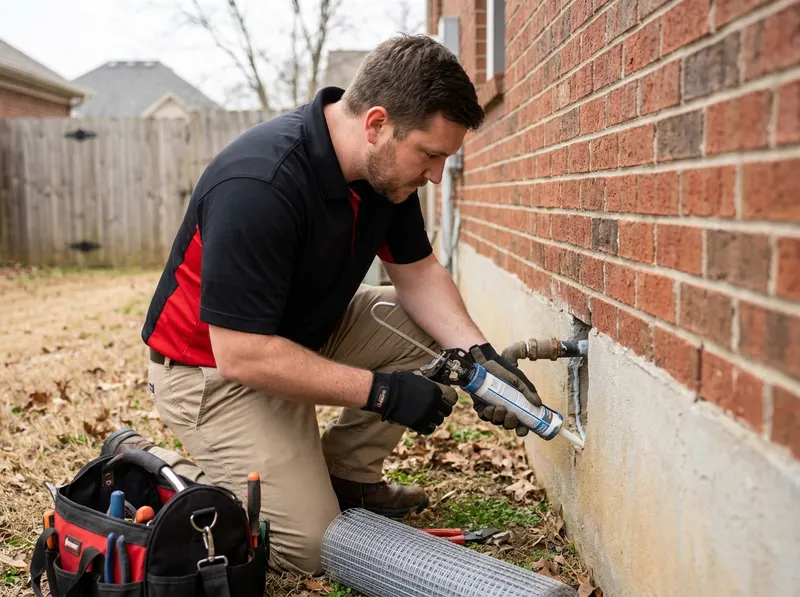
Rodent activity inside living spaces disrupts household sleep and damages building infrastructure when house mice or Norway rats chew through subflooring, drywall, and electrical wiring. According to guidelines from the Centers for Disease Control and Prevention, physical sealing of entryways is the most reliable long-term defensive strategy against commensal rodents. Chemical baits alone do not resolve the structural entry pathways, often leading to expired pests trapped within wall cavities. In Davidson County, older homes in East Nashville, Germantown, and Belmont-Hillsboro frequently possess stone foundations, unsealed crawlspace vents, and settle gaps that allow rodents direct highway access to floor joists. IronMeadow Pest Relief focuses on diagnostic structural preservation, identifying every opening greater than 1/4-inch around sill plates and soffits before securing the home without locking owners into mandatory monthly recurring spray contracts.
Suburban homes in Green Hills, Sylvan Park, and Crieve Hall frequently experience roof rat pressure due to mature tree canopies spanning roof eaves. The University of Tennessee Extension highlights how local winter drops drive rodents into heated crawlspaces and attics. IronMeadow Pest Relief technicians perform hands-on diagnostic checks across unfinished basements, dark crawlspaces, and attic floorboards rather than relying on surface sprays. Structural remediation incorporates standards recognized by the National Pest Management Association, substituting chewable foam with rigid sheet metals and masonry mortars that resist persistent incisor wear.
1. Technicians survey the exterior foundation, foundation sill plates, HVAC chase lines, and roof transitions to record physical breach points.
2. Specialized exclusion hardware, including rust-resistant steel weave from TWP Inc. and chimney caps built to National Fire Protection Association tolerances, are measured and fastened across foundation vents and roof vents.
3. Technicians enter attics and crawlspaces to seal indoor utility drop penetrations according to the International Code Council residential codes, protecting wiring paths regulated under the National Electrical Contractors Association standards.
4. Trapping devices are deployed exclusively inside the enclosed zone to remove any remaining resident rodents safely away from household pets.
5. Technicians return after 5 to 7 days to evaluate snap lines, remove captured rodents, verify the integrity of exterior barriers, and sanitize affected insulation using EPA-registered disinfectants alongside standards set by the Institute of Inspection Cleaning and Restoration Certification.
Every job gets a firm, written price after a free on-site visit.
Tell us about your residential rodent exclusion job in Nashville and we'll send a clear, written quote, usually the same day.
 IronMeadow Pest Relief